
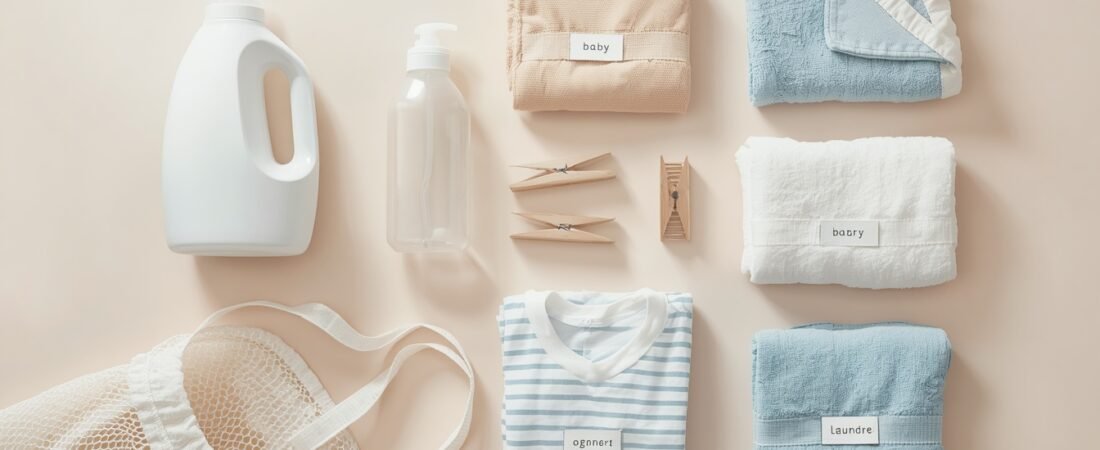
A friend of mine spent two weeks convinced her son had some kind of skin condition. Redness across his shoulders showed up out of nowhere and wouldn’t budge no matter what cream the pediatrician handed her. Turned out it wasn’t the baby. It was the laundry — specifically, the fabric softener she’d been using on her own clothes for years, which had been quietly rubbing off on his onesies every time she threw everything in one load.
Nobody tells you this stuff ahead of time. You get a stack of onesies at the baby shower and figure laundry is laundry. It mostly is. Except when it isn’t, and the difference matters more than people expect. Baby Blue hears some version of this story often enough that it seems worth writing down properly instead of explaining it one customer at a time.
Baby Skin Plays by a Different Rulebook
Here’s the thing about adult skin: it’s had years to toughen up against detergent, fragrance, rough fibers, whatever. A newborn hasn’t had any of that time. Their skin is thinner and pulls in more of whatever it touches, which means stuff you’d never notice — a bit of leftover scent, a trace of softener that didn’t fully rinse out — can genuinely bother them.
So no, baby laundry isn’t just regular laundry scaled down. It’s a slightly different job, with different stakes if you get it wrong. Nothing dramatic happens if you mess up once. But repeated exposure to the wrong products adds up, and that’s usually when a rash finally shows up with no obvious cause.
Do New Clothes Actually Need Washing First?
Yes — and honestly, this catches even experienced parents off guard by baby number two, because it’s easy to forget. Brand-new clothing has been through a manufacturing process, shipping, and warehouse storage, none of which involves anyone thinking about your baby’s skin. There’s residue from dyes, finishing chemicals, sometimes just general grime from sitting on a shelf. You can’t see it. You definitely can’t smell it. It’s there anyway.
This includes the stuff that seems too nice to need washing — a hand-knitted sweater from an aunt, say. It hasn’t touched a factory, sure, but it’s picked up whatever’s floating around wherever it was stored. Wash it. Takes ten minutes and saves you a guessing game later.
Should Baby Clothes Get Their Own Load?
For the first few months, yes, mostly. Your regular laundry carries traces of body oil, sweat, and whatever detergent or softener you’ve used for years — none of which needs to be rubbing up against a newborn’s skin. It’s not a rule you have to follow forever. Plenty of parents eventually combine loads once they’ve got a sense of how their baby’s skin reacts to things in general. But early on, keeping it separate avoids a whole category of unnecessary guesswork.
The Detergent Decision Matters More Than Anything Else Here
If you only change one thing, make it this.
Fragrance is the biggest troublemaker. It clings to fabric long after the wash cycle ends, and it’s one of the most common causes of skin irritation in babies. A detergent that smells strongly of anything — flowers, “spring meadow,” whatever marketing term is on the bottle — is worth skipping.
Fabric softener deserves a pause too, at least early on. It works by leaving a thin, waxy coating on fibers, which feels nice but can trap other irritants right against sensitive skin. Most detergents built specifically for babies already handle the softness part without needing a second product.
Dye-free is worth looking for as well. Dyes serve zero functional purpose — they’re purely cosmetic — and cutting them out removes one more thing that could set off a reaction in a baby prone to rashes or eczema.
One thing that surprises people: enzyme-based stain fighters, while great at breaking down protein stains like spit-up, can be a bit much for constant use directly against newborn skin in their stronger formulations. Save those for actual emergencies rather than every single load.
Water Temperature Isn’t the Hero People Think It Is
There’s a common assumption that hotter water cleans better, full stop. For most everyday baby loads, though, warm or cold water does the job just as well, and it’s easier on both the fabric and the skin. Save hot water for genuinely bad situations — diaper blowouts, the occasional load that needs actual sanitizing.
A gentle cycle setting helps too. Baby clothes often have smaller, more delicate seams that don’t hold up as well under aggressive spinning, and gentler cycles also tend to rinse detergent out more thoroughly instead of pushing it deeper into the fabric.
If your washer has an extra rinse option, use it for baby loads. Leftover detergent is one of those invisible troublemakers — you won’t see it, but sensitive skin picks up on it fast.
Stains: The Ongoing Battle
Spit-up, formula, some unidentified stain that appeared during a car ride — baby clothes go through it. Most of it comes out fine if you deal with it early instead of letting it sit for a few days in the hamper.
For protein-based stains like spit-up or breast milk, cold water beats hot every time. Heat tends to lock the stain in rather than lift it out. A short soak followed by a normal gentle cycle usually clears it. For something more stubborn, a small amount of stain treatment applied directly works better than just adding extra detergent to the whole load.
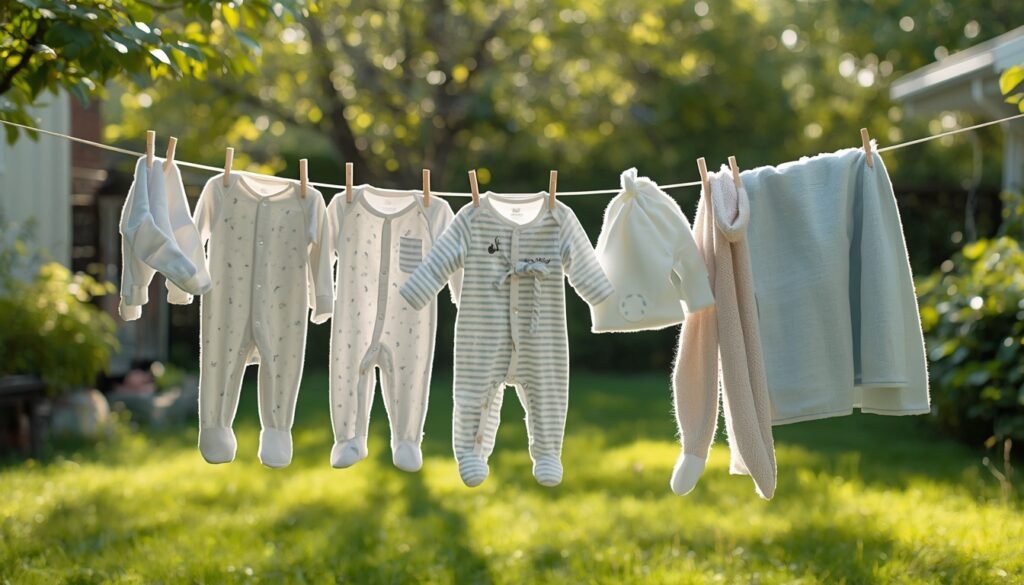
And if the sun’s out, hanging a stained item outside to dry is an old trick that genuinely still works. Sunlight has a mild bleaching effect on a lot of common baby stains without any of the harshness that comes with actual bleach.
Drying Matters Just as Much as Washing
Dryer sheets have the same fragrance-and-residue issue as fabric softener, so it’s worth leaving them out of baby loads specifically. Wool dryer balls do a similar job — less static, softer fabric — without any chemical residue involved.
Lower heat settings help preserve elastic waistbands and delicate seams, both of which wear out fast under high heat anyway, especially given how quickly babies outgrow clothes in the first place. Air-drying, when there’s time for it, is gentler still and worth doing when the weather allows.
What Changes Once You’ve Actually Got a System
The first stretch of new-parent laundry is mostly trial and error. Then a routine settles in, and a few things shift without much fanfare.
Skin reactions drop off — that’s the obvious one. Less obvious: clothes last longer, since gentler washing and lower heat mean less wear on fabric that’s already headed for the hand-me-down pile in a few months anyway. There’s also just less standing around a store aisle second-guessing every bottle, because you already know what your baby tolerates. And there’s a quieter kind of relief in that — one less thing to worry about during a stretch of life that’s already full of things to worry about.
Why Bother Getting This Right Early
Skin conditions like eczema rarely announce themselves all at once. They usually start small — a patch of redness, a spot that won’t quite clear — and either get caught early or turn into something that lingers for years. A laundry routine that avoids the usual irritants can genuinely be the difference.
There’s a financial side too, even if it’s a small one. Clothes that hold up longer because they’re washed properly mean fewer replacements. Fewer unexplained rashes mean fewer pediatrician visits. None of it’s huge on its own, but it adds up over a year or two.
A Short List Worth Keeping Somewhere Visible
- Wash everything before the first wear, gifts included
- Pick fragrance-free, dye-free detergent
- Hold off on fabric softener and dryer sheets for a while
- Run baby clothes separately, at least at first
- Warm or cold water for regular loads
- Extra rinse cycle if your machine has one
- Treat stains fast, cold water first
- Dry on low heat, or skip the dryer entirely when you can
Why People Keep Ending Up at Baby Blue
Plenty of stores sell baby laundry products, and from the outside, most of the shelves look pretty interchangeable. What actually brings people back to Baby Blue tends to be less about the products themselves and more about getting a real answer instead of a guess.
The team explains why a particular detergent fits a specific skin type instead of just gesturing at what’s in stock. The selection stays intentionally limited — fragrance-free, dye-free products that hold up to actual scrutiny rather than fifty near-identical bottles crowding a shelf.
Baby Blue’s has become something of a fixture for parents around Ridgewood, sitting at 56-36 Myrtle Ave, Ridgewood, NY 11385. It’s the kind of place you can walk into mid-panic over a mystery rash and walk out with an actual explanation instead of another product to try blindly.
Prefer to talk it through first? Call +1 (718) 456-1409. Worth checking ahead around holidays, since hours can shift a little then.
Questions That Come Up Often
Do new baby clothes really need washing before the first wear?
Yes. Manufacturing residue, dye, and shipping chemicals aren’t visible or detectable by smell, but they can still bother sensitive skin.
Can I just toss baby clothes in with my regular laundry?
Better not to, at least early on. Adult detergents tend to carry fragrance and additives that are too strong for a newborn.
Is fabric softener actually a problem?
For young babies, generally yes. The residue traps irritants against the skin, and most baby-focused detergents already have enough built-in softness.
What water temperature should I use?
Warm or cold handles most everyday loads fine. Save hot water for the seriously messy stuff.
How do I deal with spit-up stains?
Cold water first, always — heat sets the stain instead of lifting it. A quick soak plus a gentle wash usually does it.
Is separating baby laundry from the rest really necessary?
For the first several months, yes. It keeps stronger adult detergents and residue away from more reactive skin.
Does Baby Blue stock anything for eczema-prone skin?
Yes, it’s actually one of the bigger focuses in the store — fragrance-free, dye-free options built for sensitive skin.
Where’s Baby Blue, and what’s the best way to reach you?
56-36 Myrtle Ave, Ridgewood, NY 11385. Call +1 (718) 456-1409 anytime with questions.
The Short Version
None of this requires a complicated setup. Fragrance-free detergent, sensible water temperature, quick stain treatment, gentler drying — that covers most of it. Once it becomes routine, it stops feeling like extra effort and just becomes how laundry gets done in the house.
If you’d rather work through a specific situation than keep guessing, Baby Blue’s at 56-36 Myrtle Ave, Ridgewood, NY 11385, or a call away at +1 (718) 456-1409.